

TLDR: Getting paid in crypto in 2026 mostly means stablecoins (USDC, USDT) pegged to the dollar: not volatile tokens.: The most common structure is a fiat or stablecoin base plus a vesting token grant., Token grants typically vest over four years with a one-year cliff and headline "total comp" is a projection, not cash., You still owe taxes, crypto pay is taxable like any other income.
Knowing how to get paid in crypto is now part of evaluating any web3 offer, and the reality is more stable than the headlines suggest. In 2026, most crypto pay is denominated in stablecoins pegged to the dollar, often alongside a token grant that vests over years. Volatile-token salaries are rare and reputable companies pay predictable, dollar-value compensation.
This guide breaks down the main structures, how stablecoins and token grants work and what to watch on taxes. None of this is financial or tax advice, check your own situation. To see live roles, you can browse web3 jobs as you read.
What does it mean to get paid in crypto in 2026?
To get paid in crypto in 2026 usually means receiving stablecoins, dollar-pegged tokens like USDC and USDT, rather than volatile assets. Workers get the equivalent of a fixed dollar amount, settled on-chain to a wallet in seconds rather than through slow bank wires. It's the dominant model because it combines predictable value with the speed of crypto rails.
The volatile-token image of crypto pay is largely outdated. Paying full salaries in assets like ETH or BTC is rare now, mostly limited to crypto-native teams whose workers actively want price exposure. For nearly everyone else, "paid in crypto" means digital dollars. That shift toward stablecoins is what makes crypto pay far less risky than its reputation suggests. Rather than gambling your salary on token prices, you receive predictable dollar value that happens to settle on-chain, with any speculative exposure being a separate, optional choice you make afterward. Understanding that distinction is the first step to evaluating any crypto offer clearly.
How does getting paid in stablecoins work?
Getting paid in stablecoins works much like normal payroll, except the payout lands in your wallet as USDC or USDT instead of your bank account. Your pay is calculated in dollars and you receive the equivalent value on-chain, with no exposure to token price swings at the moment of payment. You can then hold the stablecoins or convert them as you choose.
This model is especially popular for globally distributed and contractor teams, because it removes the fees and delays of cross-border wire transfers. A payment settles in seconds whether the recipient is in Berlin, Lagos or Singapore. USDC is the most widely used stablecoin for payroll, with USDT close behind.
How does crypto token compensation work?
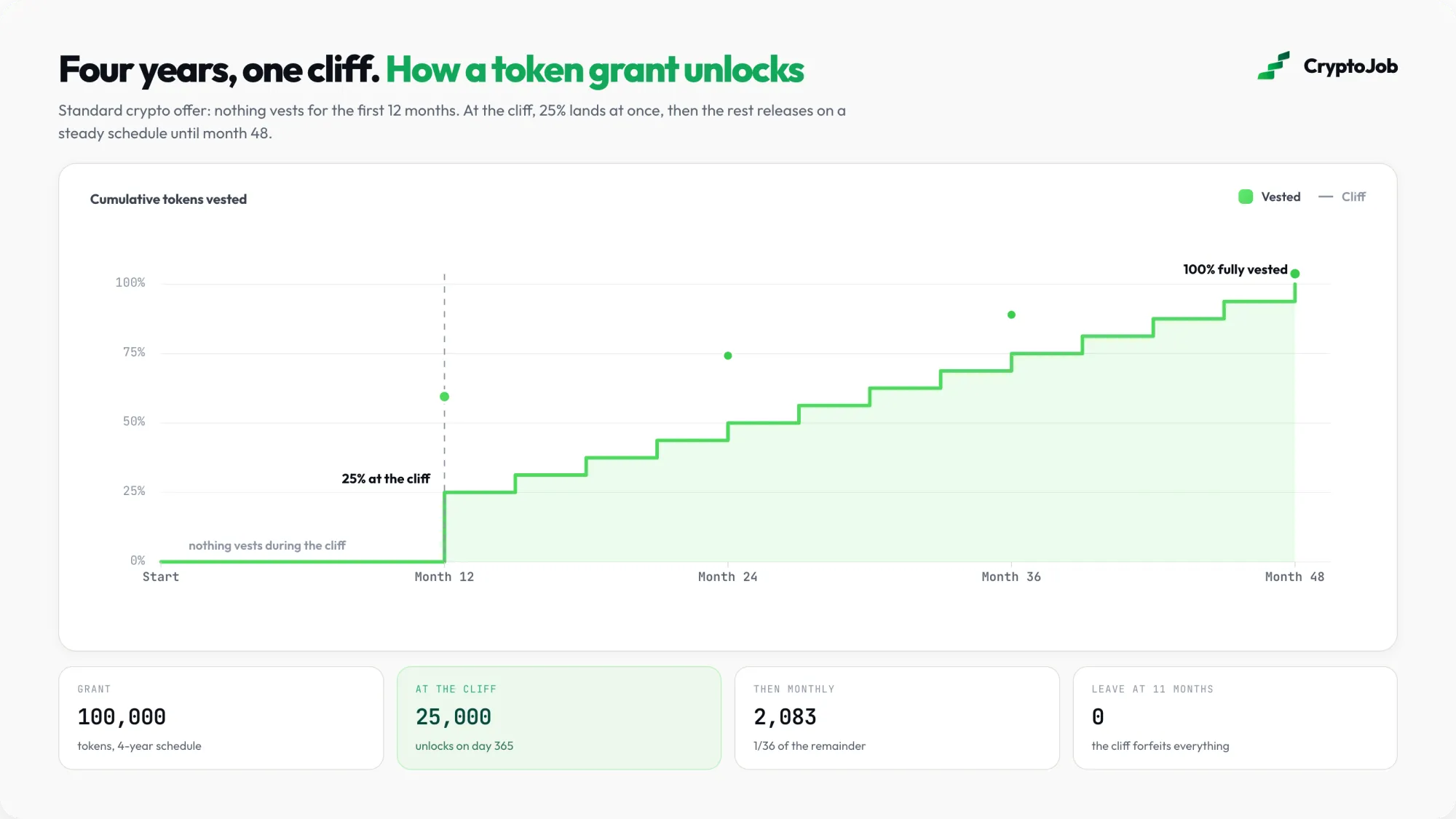
Crypto token compensation works like startup equity, but denominated in a project's native token. The most common structure is a hybrid: a fiat or stablecoin base salary plus a token grant awarded on top, subject to a vesting schedule. Paying in the native token aligns your incentives with the protocol's success.
The standard vesting schedule mirrors traditional equity, typically four years with a one-year cliff, after which 25% vests and the rest unlocks gradually. Some DAOs use shorter schedules or stream tokens continuously via smart contracts. The key caveat is that a token grant's value can swing sharply, so treat headline "total comp" figures as projections rather than guaranteed pay.
What are the main ways to get paid in crypto?
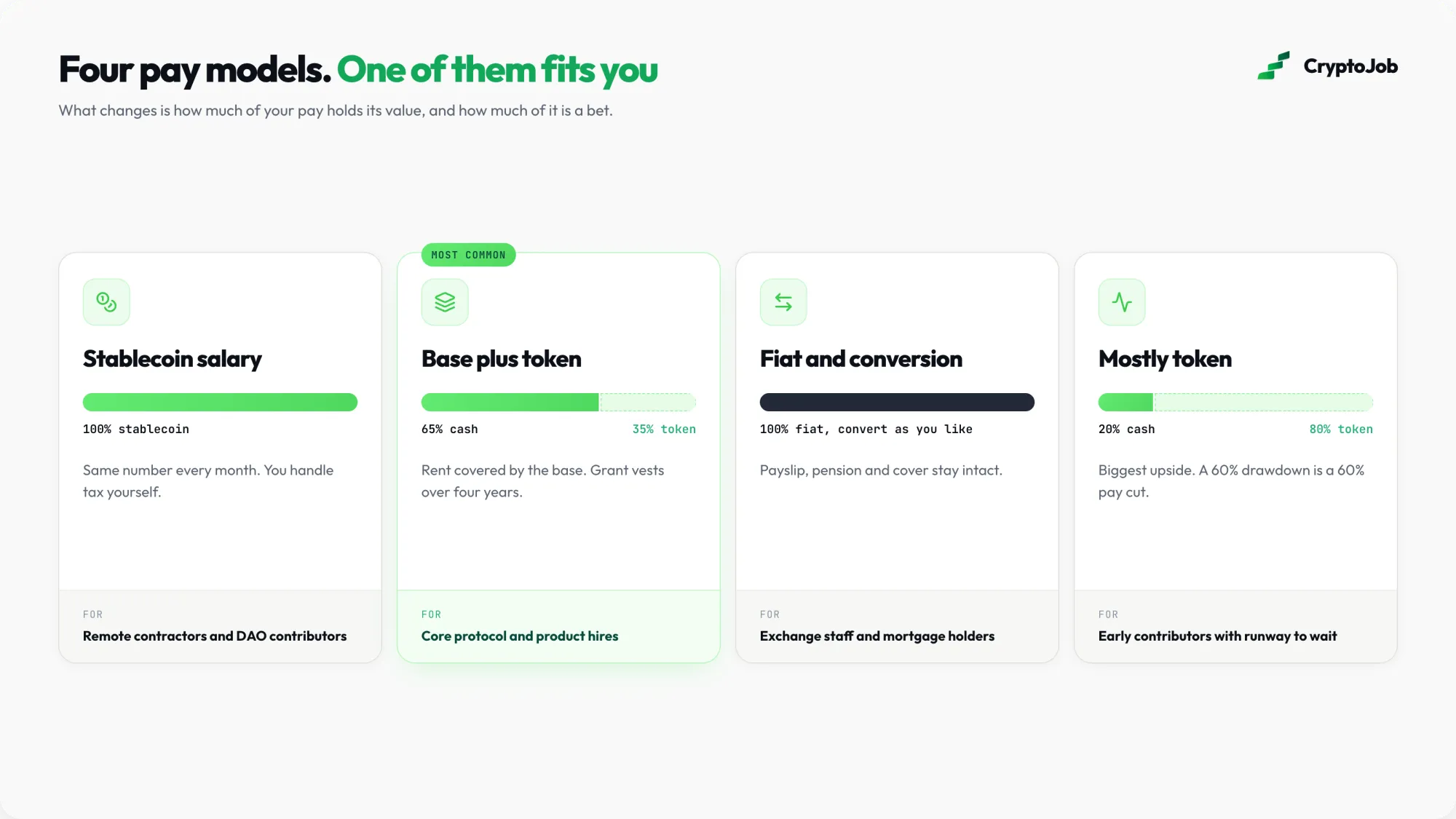
The main ways to get paid in crypto fall into a few clear models, and understanding which one an offer uses matters. Some are fully on-chain; others are ordinary payroll with a crypto option layered on. The right structure depends on whether you're an employee or contractor and where you live.
| Model | What you get | Best for |
|---|---|---|
| Stablecoin salary | Fixed dollar value in USDC/USDT | Global and contractor teams |
| Hybrid (base + token) | Fiat/stablecoin base plus vesting token grant | Most full-time web3 roles |
| Fiat + conversion | Standard payroll, convert net pay to crypto | US and EU employees |
| Volatile-token pay | Fixed quantity of tokens (value varies) | Rare, crypto-native only |
For US and EU employees, the most common compliant approach is standard fiat payroll with an optional post-tax conversion to stablecoins, which keeps wage law untouched. Crypto-native teams and DAOs are more likely to run fully on-chain payroll.
How does web3 payroll actually run?
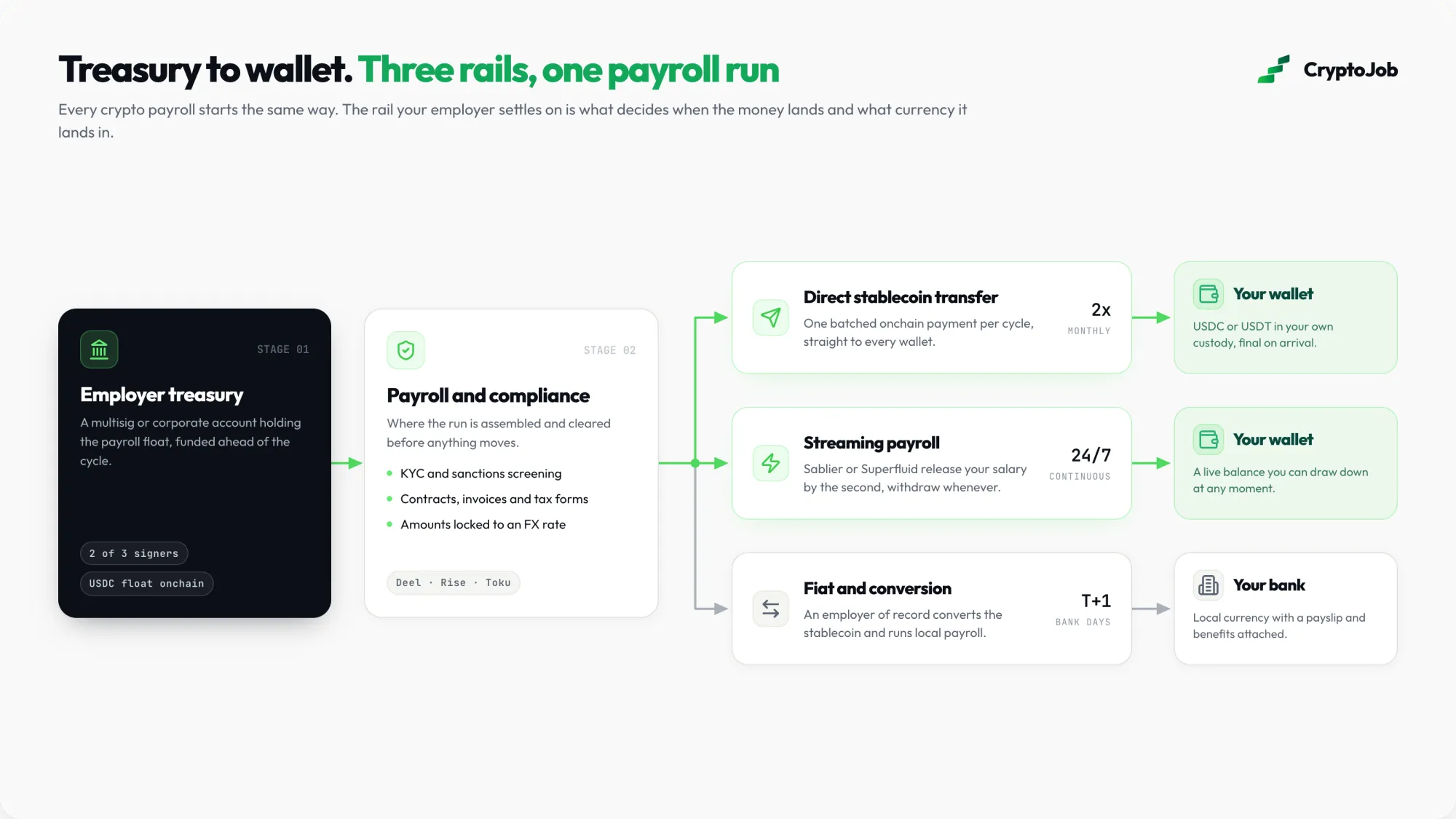
Web3 payroll runs through a mix of specialized platforms and on-chain tooling. Companies typically use a payroll provider that handles tax forms and compliance, paired with a settlement layer that moves stablecoins to workers on their preferred chain. Platforms like Rise, Deel, Toku and Bitwage operate in this space.
For crypto-native teams, payroll often flows from a multi-signature treasury, sometimes streaming continuously through tools like Sablier or Superfluid. For employees in high-inflation economies, an employer of record with stablecoin rails can handle local compliance while paying net wages in USDC. The common thread is one unified process with worker choice over how to receive pay.
What about taxes when you get paid in crypto?
Taxes still apply when you get paid in crypto, it's income and it's taxable like any other compensation. Payroll providers typically calculate gross-to-net in fiat and handle statutory obligations, even when the payout is a stablecoin. Contractors are often treated as independent and responsible for their own filings.
Token grants add complexity, because they can be taxed differently depending on jurisdiction and when they vest. This is exactly the kind of thing to confirm with a qualified tax professional in your country, since rules vary widely and change. Reading a token-inclusive total-comp figure as guaranteed, tax-free cash is one of the most common ways compensation math goes wrong. Keeping clear records of what you received and when, in dollar terms, makes that reconciliation far easier at filing time.
What are the pros and cons of getting paid in crypto?
Getting paid in crypto has real advantages, especially for globally distributed workers. Stablecoin payments settle in seconds, avoid the fees and delays of international wire transfers and let you receive dollar-denominated income regardless of your local banking system. For people in countries with unstable currencies or slow banking, that access alone can be a major benefit.
Token grants add upside that behaves like startup equity, aligning your earnings with a protocol's success. In a strong project, a vesting token allocation can become worth far more than its grant-date value. That potential is a genuine draw, and it's part of why senior talent increasingly expects tokens as part of a package.
The downsides are just as important to weigh. Token values are volatile, so a headline total-comp figure can shrink dramatically before it vests and treating it as guaranteed cash is a common mistake. There's also added complexity around taxes, custody and security, you're responsible for a wallet and mistakes can be costly. Regulatory treatment varies by country and continues to evolve. The balanced view is that stablecoin base pay is low-risk and genuinely convenient, while token components are best treated as upside you hope for rather than income you count on. Understanding both sides before signing an offer keeps your compensation math honest.
Frequently asked questions
Do most crypto jobs pay in volatile tokens like Bitcoin?
No. In 2026, most crypto pay is in dollar-pegged stablecoins like USDC and USDT, giving predictable value. Volatile-token salaries are rare and mostly limited to crypto-native teams whose workers want price exposure.
What is the most common crypto pay structure?
A hybrid model: a fiat or stablecoin base salary plus a native-token grant on top, usually with a four-year vesting schedule and a one-year cliff. The base covers predictable income while the token grant offers equity-like upside.
Do you pay taxes on crypto salary?
Yes. Crypto compensation is taxable income, and payroll providers typically handle withholding in fiat terms. Token grants can be taxed differently by jurisdiction and vesting event, so confirm the details with a qualified tax professional.
Is getting paid in stablecoins safe?
Stablecoins like USDC and USDT are designed to hold a stable dollar value, so there's no price volatility at the moment of payment. The main considerations are custody of your wallet and choosing reputable employers and platforms.
How fast do crypto payments settle?
Very fast, stablecoin payouts typically settle in seconds to a couple of minutes, regardless of the recipient's country. That speed and low cost are a big reason global teams adopt crypto payroll.
The bottom line
Getting paid in crypto in 2026 is more stable and predictable than its reputation: mostly stablecoins for base pay, with vesting token grants for upside. Understand which structure an offer uses, treat token figures as projections and plan for taxes. When you're ready, browse web3 jobs and evaluate offers with the compensation mechanics in mind.